
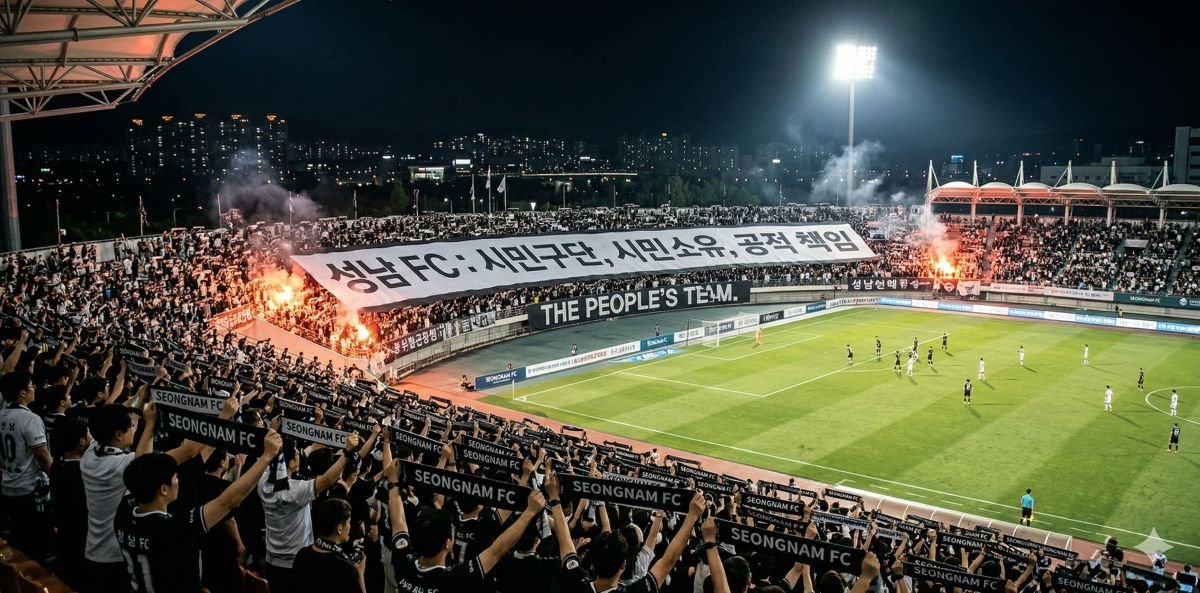
Walking through the streets of Seongnam on a Wednesday afternoon in April 2026, it is easy to spot the black jerseys of the local football club. For long time fans, this color represents more than just a fashion choice. It is a visual reminder of a massive shift in how a sports team can exist within a city. Before 2014, the team wore bright yellow and was known as Ilhwa Chunma. That version of the club was owned by a private corporation, the Tongil Group, which was affiliated with the Unification Church. Today, the club belongs to the city itself. This change was not just a branding exercise, it was a fundamental reorganization of the club’s legal and financial identity.
A Legacy of Private Success and Sudden Crisis
The history of the club is full of trophies. Founded in 1989, Ilhwa Chunma became a dominant force in Korean football. They won three consecutive league titles in the mid-1990s and another three in the early 2000s. In 2010, they even reached the top of Asian football by winning the AFC Champions League. However, this success was tied to the personal interest and financial backing of Sun Myung Moon. When he passed away in 2012, the club’s future became uncertain.
The Tongil Group began a restructuring process, and the family members in charge showed little interest in maintaining a professional football team. The threat of disbandment became a real possibility. This situation highlighted a major vulnerability in private ownership. If a single owner or a corporation loses interest or faces financial trouble, an institution that a community cares about can vanish overnight.
The Civic Mobilization and the 2013 Takeover
Faced with the loss of their team, the people of Seongnam took action. Fans, local officials, and even supporters of rival K League teams joined together to demand that the club be saved. This was a significant moment in Korean sports history. It was not just about keeping a team in the city, it was about proving that a sports club could be a public asset.
In late 2013, Seongnam City officially took over the club. The transition involved more than just changing the name to Seongnam FC. The club replaced its previous symbols with the magpie, which is the official bird of the city. The yellow uniforms were retired in favor of the current black and white kit. This transition turned the club into a “civic club,” a specific model where the local government acts as the primary owner.
How the Civic Model Functions
In a civic club model, the governance structure is quite different from a typical business. The Mayor of Seongnam serves as the representative owner. This means the club is essentially a public entity. Its operations depend on annual budget allocations from the city council rather than a private owner’s deep pockets.
This structure brings a high level of public accountability. Every won spent by the club is public money, which means the city hall provides close oversight. While this ensures that the club remains a part of the community, it also introduces bureaucratic hurdles. Decisions that might take a private owner minutes can take weeks when they have to move through government committees. Spending is often less flexible, and the club must justify its existence to taxpayers who might not follow football. This legal framework is a clear example of how legal structures shape user behavior and institutional decisions within the city.
The Binary Landscape of the K League
The K League is currently divided into two types of ownership. On one side, you have the corporate clubs, or “chaebol” teams. These are backed by massive conglomerates like Hyundai or Samsung. These teams often have larger budgets and more stability because they are part of a global marketing strategy. On the other side are the civic clubs, owned by local governments like Seongnam, Gwangju, or Suwon.
This binary system creates a unique competitive environment. Civic clubs often have to be more creative with their resources. They focus on local integration and developing young talent because they cannot always outspend the corporate giants. For Seongnam FC, now competing in the second tier, the focus is on building a sustainable path back to the top division. Fans who want to understand the current stakes can look at the 2026 K League 2 promotion and relegation guidelines to see how the club is managing its current resources.
The Consequences of Municipal Oversight
The move to a civic model changed the relationship between the fans and the team. Because the club is funded by the city, the residents feel a different sense of ownership. The team is no longer a marketing tool for a church or a company, it is a representation of the city’s identity.
However, the municipal framework also means the club’s fortunes can be tied to local politics. Changes in the city council or a new mayor can lead to shifts in the club’s budget or leadership. This creates a tension between the long term needs of a football team and the short term cycles of local government. Despite these challenges, the civic model saved professional football in Seongnam. It provided a template for how a community can step in when private interests fail.
A Public Institution on the Pitch
Seongnam FC stands as a case study in resilience. The club moved from being a private project to becoming a public institution. It survives not through the whims of a single corporation, but through the collective will of the city’s residents and officials. While the days of winning seven league titles might feel like a distant memory, the current version of the club has a foundation that is arguably more stable because it is rooted in the city itself.
The story of the magpies is a reminder that sports teams are often more than just businesses. They are parts of a city’s social fabric. By choosing the civic model, Seongnam ensured that the cheers heard at the stadium today are for a team that truly belongs to the people who live there.