
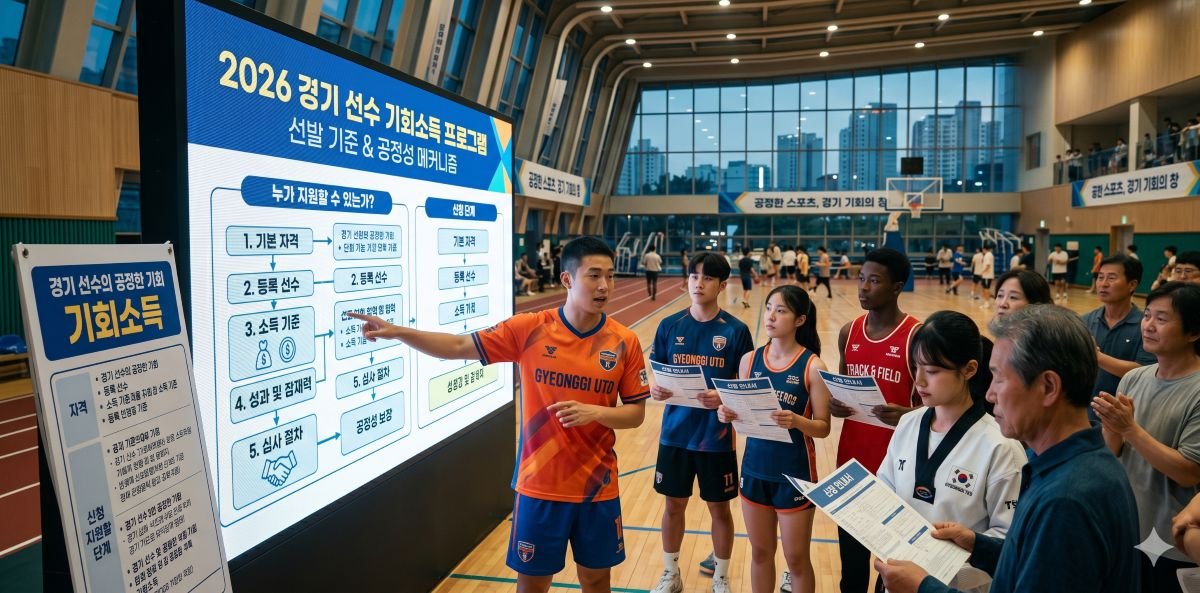
Gyeonggi Province has opened applications for its 2026 Athletes’ Opportunity Income program, a policy instrument designed to provide financial support to professional and semi-professional athletes whose sporting activity generates social value for their communities. The program represents a meaningful attempt to address one of the structural vulnerabilities in Korean athletic careers: the gap between the visibility of sport and the economic precarity of the people who practice it at levels below the top professional tier.
But the program’s design contains a geographic boundary that raises substantive questions about how fairness is defined in provincial sports policy — and what it means for athletes in Seongnam, Yongin, and Goyang, who are currently excluded from eligibility.
What the Program Is Designed to Do
The Athletes’ Opportunity Income program operates on a principle that has gained traction in Korean sports policy in recent years: that athletes who contribute to community life through sport — through participation, visibility, youth development, and local identity — create value that the market does not automatically compensate. A semi-professional footballer competing in a lower league, a track athlete representing a regional club, a basketball player whose career exists outside the commercial spotlight of the KBL — all of these individuals generate social goods that are difficult to price but real in effect.
The program responds to this by providing income support that is not tied to contract value or commercial success, but to the act of competitive athletic participation itself. It is closer in concept to a civic recognition of athletic labor than to a performance bonus or prize fund.
For athletes in eligible areas of Gyeonggi-do, this represents a meaningful safety net. Professional sports careers in Korea — outside the handful of highest-profile leagues — frequently involve financial instability, short career windows, and limited post-career support. A provincial income supplement does not resolve those structural problems, but it addresses one dimension of them directly.
The Exclusion and Its Logic
Seongnam, Yongin, and Goyang are currently not included in the eligible applicant pool. The administrative reasoning behind this exclusion reflects a tiered model of local government capacity that is embedded in Korean provincial governance.
Seongnam is classified as a large-scale city — a designation that carries implications not just for administrative structure but for fiscal responsibility. Large-scale cities in South Korea operate with greater budget autonomy than smaller municipalities, maintain more developed local infrastructure, and are generally expected to fund sports and cultural programs from their own resources rather than relying on provincial redistribution.
From the province’s perspective, the exclusion is a resource allocation decision. If Seongnam’s municipal budget already supports substantial sports infrastructure — including institutions like Seongnam FC and associated athletic programs — then directing provincial funds toward athletes in that city represents a less efficient use of redistributive policy than directing them toward athletes in smaller districts with fewer local resources.
The logic is internally coherent. But it produces a concrete inequity at the individual level: two athletes of equivalent status, competing at equivalent levels, generating equivalent social value through their sport, may have access to very different levels of financial support depending purely on which city within Gyeonggi Province they happen to live in.
What Seongnam Athletes Navigate Instead
For athletes based in Seongnam who fall outside the provincial program’s eligibility criteria, the relevant support structures exist at the municipal level rather than the provincial one. Seongnam’s own sports administration budget and any locally operated athlete support programs become the primary recourse.
This creates an administrative navigation challenge that requires athletes and their clubs to understand not just whether support exists, but which level of government administers it, under what criteria, and through which application channels. The gap between provincial and municipal frameworks is not always visible from the outside — and for athletes focused on training and competition rather than bureaucratic research, it can result in support going unclaimed simply because the right pathway was not identified.
It also raises a question about whether the large-scale city classification, which was designed around fiscal capacity and administrative infrastructure, is the right proxy for determining individual athlete need. A city’s aggregate sports budget tells you something about institutional capacity. It does not tell you much about the financial circumstances of a semi-professional athlete living in that city.
The Broader Governance Question
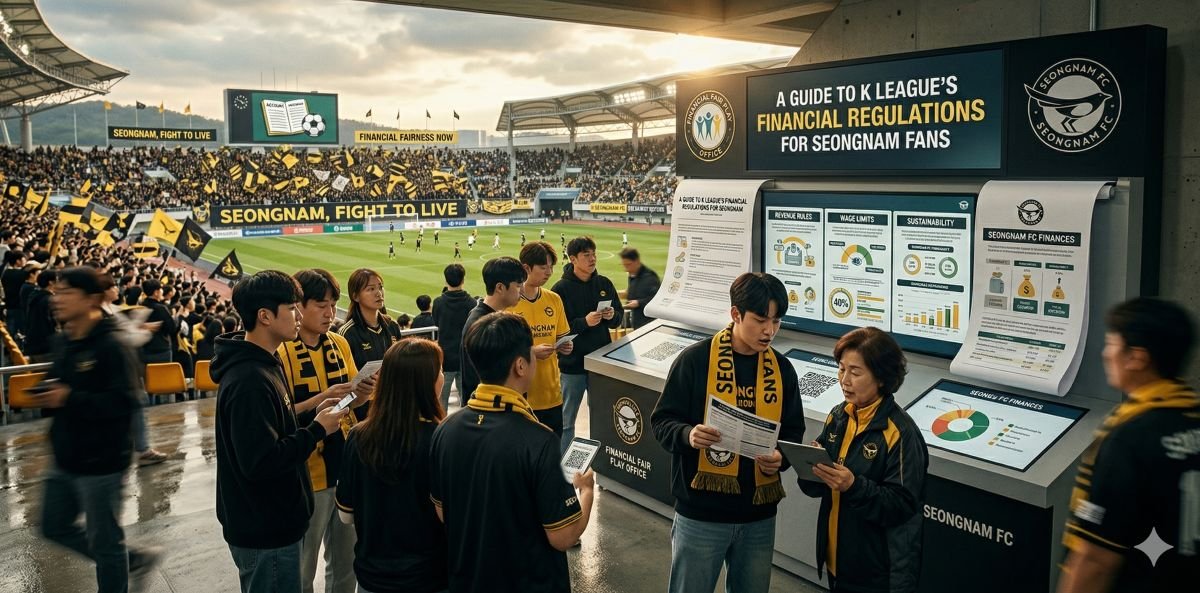
The Gyeonggi Athletes’ Opportunity Income program sits at the intersection of sports policy, regional equity, and the ongoing Korean conversation about what public support for athletes should look like. For a fuller picture of how Korean sports governance structures shape the financial landscape for athletes and clubs at different competitive levels, the analysis at Seongnam Insider on K League financial regulations provides useful context on how funding frameworks operate across Korean football’s tiered system.
The program’s exclusions are not arbitrary — they reflect real distinctions in how Korean local government is structured. But they are worth examining carefully, because the principles embedded in policy design shape who benefits and who navigates the system alone.
For broader context on how regional governance structures and sports subsidy debates play out in practice, 정책 논쟁이 경기장을 넘어서는 지점 offers relevant framing on how institutional constraints shape what support reaches athletes and communities at the local level.