
2026 K League 2 Promotion and Relegation: A Guide for Seongnam FC Fans

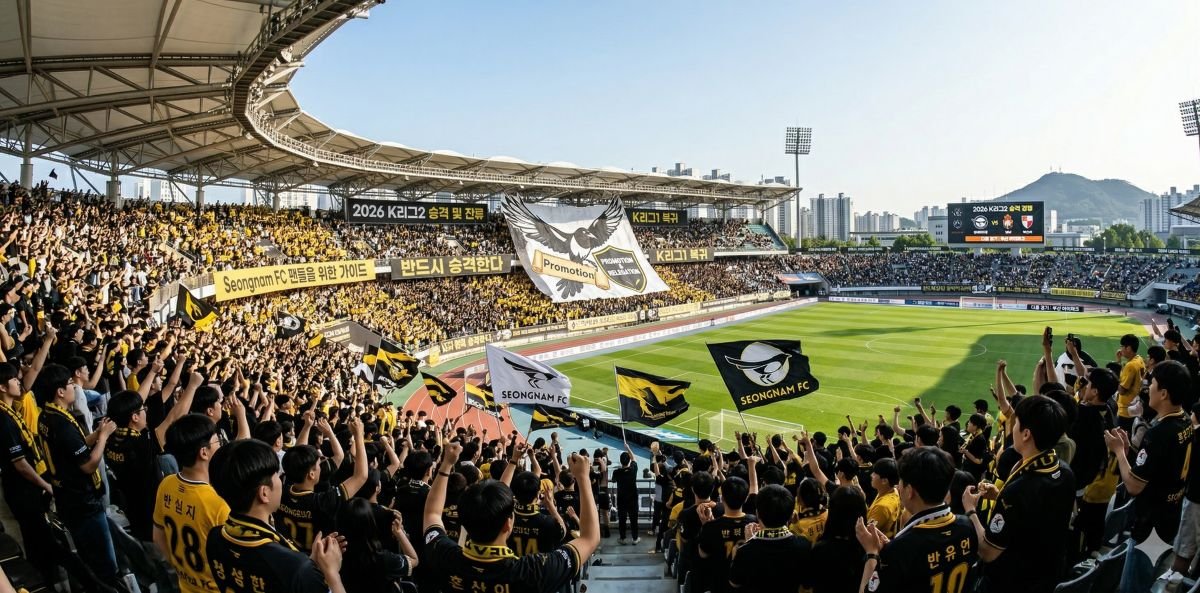
The 2026 K League 2 season marks a fundamental shift in the landscape of South Korean football. For years, the second division operated as a somewhat insulated environment where the primary focus was looking upward toward the top flight. That changed this year with the historic introduction of movement between K League 2 and the K3 League. This new layer of consequence means that every match involves a calculation of survival, not just ambition.
For a club like Seongnam FC, a pillar of football in Gyeonggi-do, the stakes have shifted from a simple desire for promotion to a multi-front battle. Understanding the mechanics of this system is the only way to make sense of the tension currently felt at Tancheon Sports Complex.
The Race for the Top: Automatic Promotion
The most straightforward path to K League 1 remains the most difficult to achieve. In 2026, the reward for consistency is higher than ever, as the top two teams in K League 2 earn automatic promotion. In previous cycles, only the champion was guaranteed a spot, forcing the runner-up into a volatile playoff against a K League 1 side.
By doubling the automatic promotion slots, the league has incentivized aggressive, win-oriented strategies. For Seongnam FC, finishing in these top two spots isn’t just about prestige, it is about financial security. Skipping the playoff rounds allows a club to begin its top-flight recruitment and budgeting weeks earlier than those stuck in the post-season tournament.
The Playoff Gauntlet: Third through Sixth
Below the top two, the league enters a high-stakes knockout phase. Teams finishing third, fourth, fifth, and sixth enter a promotion playoff structure. This is where the table position becomes a tactical weapon. The higher a team finishes within this bracket, the more advantages they receive, such as home-field preference and the “draw-advance” rule, where the higher-seeded team moves on if the match ends in a tie after regulation.
This structure creates a “league within a league.” A team in fourth place isn’t just playing to win, they are playing to catch the third-place team to secure a home match. For supporters, watching the point gap between sixth and seventh place is now just as important as watching the title race. One lapse in concentration in September can be the difference between a shot at the big leagues and another year in the second division.
The New Threat: K3 League Relegation
While the top of the table fights for glory, the bottom of the table is now a site of genuine peril. For the first time, the bottom-placed K League 2 club faces a direct threat from below. The team finishing last must defend its professional status in a single-match playoff against the K3 League champion.
This match is held at the home stadium of the K League 2 club, providing a slight geographic advantage, but the psychological pressure is immense. In this scenario, the K3 side plays with the house money of a potential historic upset, while the K League 2 side plays with the weight of a potential collapse. This addition ensures that matches between bottom-tier clubs in the final weeks of the season are no longer “dead rubbers” but desperate fights for professional relevance.
Why Position Matters More Than Ever
In this restructured environment, the league table is no longer just a list of who is winning, it is a map of risk and reward. Every rung on the ladder offers a different level of protection or opportunity. This is particularly true when analyzing how teams react to the pressure of the new system.
When a team like Seongnam FC finds itself in a mid-table scramble, the leadership must decide whether to pivot toward a defensive stance to avoid the bottom-tier playoff or to overextend for a top-six finish. These decisions are often influenced by how the club perceives its own stability and the fairness of the results they’ve seen so far. Interestingly, many supporters and even players often struggle with how a well-run team can still find itself in a relegation scrap. You can find a deeper look into why systems feel rigged early on to understand the psychological side of these table shifts.
The Seongnam FC Context
Seongnam’s position is unique because of its history and resources. As a club that has tasted continental glory, the pressure to occupy the top two spots is constant. However, the 2026 system punishes clubs that rely on reputation over current data. If the team falls into the third-to-sixth-place bracket, they enter a territory where variance and luck play a much larger role than they do in the 36-game regular season.
In short-tournament formats like the promotion playoffs, a single refereeing decision or a deflected shot can undo months of tactical discipline. This is why the push for automatic promotion is so frantic. The goal is to escape the “noise” of the playoffs entirely. For those interested in the math behind why these high-stakes matches often feel so unpredictable, it’s worth exploring the limits of probability in single event outcomes.
Conclusion
The 2026 K League 2 season has successfully removed the “boring” middle of the table. By adding a second automatic promotion spot and a relegation playoff at the bottom, the K League has ensured that almost every team has something to play for until the final whistle of the final day. For Seongnam FC, the mission is clear: stay out of the chaos of the playoffs and the danger of the basement. In this new era, the table isn’t just a record of the past, it’s a predictor of a club’s survival.
For further reading on the regional context of these changes, you can see how 법적 구조가 이용자 행동을 형성하는 방식 in the sports industry across different cities.