

For the first time in the 43-year history of Korean professional football, K League clubs can sign as many foreign players as they choose. The 2026 season marks a structural reset in how squads are assembled — one that arrives simultaneously with a league expansion on the horizon and a set of additional rule changes affecting goalkeeper eligibility, youth requirements, and the definition of who counts as a domestic player. Understanding what changed, what stayed the same, and why it matters gives any Korean football fan a clearer framework for following the 2026 season.
What the Quota Abolition Actually Means
The registration limit that previously capped the number of foreign players a club could hold on its books no longer exists. In K League 1, that cap was six players as of the 2025 season. In K League 2, it was five. Both are gone.
What remains is a deployment cap. A maximum of five foreign players may be on the pitch simultaneously in K League 1, or included in the matchday squad. This is itself an increase — the previous on-pitch limit was four. K League 2 retains a four-player simultaneous limit, but also removes the registration cap and now allows a 20-player matchday squad, up from 18.
The practical consequence is that clubs can now build foreign player depth beyond what they could previously deploy. A club could register eight or ten foreign players and rotate them across competitions and fixtures without breaching any rule, as long as no more than five are on the pitch at once. Early-season data reflects how quickly this has been absorbed: by late March 2026, K League 1 clubs had registered 57 foreign players across 12 clubs, drawn from over 20 countries, with Brazil accounting for 24 of them.
According to K League United’s coverage of the rule change announcement, the federation’s stated rationale was international competitiveness. The AFC Champions League had already scrapped its own foreign player quota, meaning Korean clubs were operating under domestic restrictions that their continental rivals were not. The abolition brings K League 1 into alignment with the broader regional trend.
The 26-Year Goalkeeper Ban Is Lifted
Running alongside the quota abolition is a change that carries significant symbolic weight: the ban on foreign goalkeepers, in place since 1999, has been removed.
The ban’s origin was practical. In the mid-1990s, when the K League operated with only eight clubs, foreign goalkeepers — most notably the Soviet-era players who dominated the position at their clubs — were considered to be preventing the development of Korean domestic goalkeepers. The restriction was introduced to protect a position that feeds directly into the national team pipeline.
The K League board’s decision to lift it in 2025, effective for the 2026 season, rested on changed circumstances. With 26 professional clubs now spread across K League 1 and K League 2, the argument that there are insufficient playing opportunities for Korean goalkeepers no longer holds in the same way. The board also noted that the salary market for domestic goalkeepers had become disproportionately inflated — an artificial effect of a protected market with constrained supply.
What “Homegrown” Means Under the Current Rules
The removal of foreign registration limits does not mean every foreign-born player in a club’s squad counts toward the five-player on-pitch cap. The K League’s homegrown system — introduced in 2025 and carried forward into 2026 — creates a domestic classification pathway for foreign-nationality players who developed through Korean football’s amateur structure.
A player of foreign nationality who spent three consecutive years, or five cumulative years, in Korean amateur clubs qualifies as a domestic player upon signing professionally. This classification is meaningful: such a player does not count against the five-player simultaneous limit when on the pitch.
North Korean players are also treated as domestic players under South Korean nationality law, a provision that has existed for some time but carries greater practical relevance now that the foreign player classification directly determines deployment constraints.
The U22 Rule That Survived in a Different Form
The mandatory U22 starting rule — which required clubs to name an under-22 player in the starting lineup and on the bench to access all five substitution slots — has been dropped for K League 1. The rule had been widely criticized as a mechanism that clubs gamed rather than genuinely applied, often fulfilling the letter of the requirement through early substitutions.
What replaced it is less coercive but still present: the 20-man matchday squad must include at least two players under 22. A squad with only one U22 player is reduced to 19. A squad with none is limited to 18. The intent shifts from forcing coaches to make tactical choices around young players to simply ensuring young players remain part of the squad environment.
What This Means for Seongnam and K League 2 Clubs
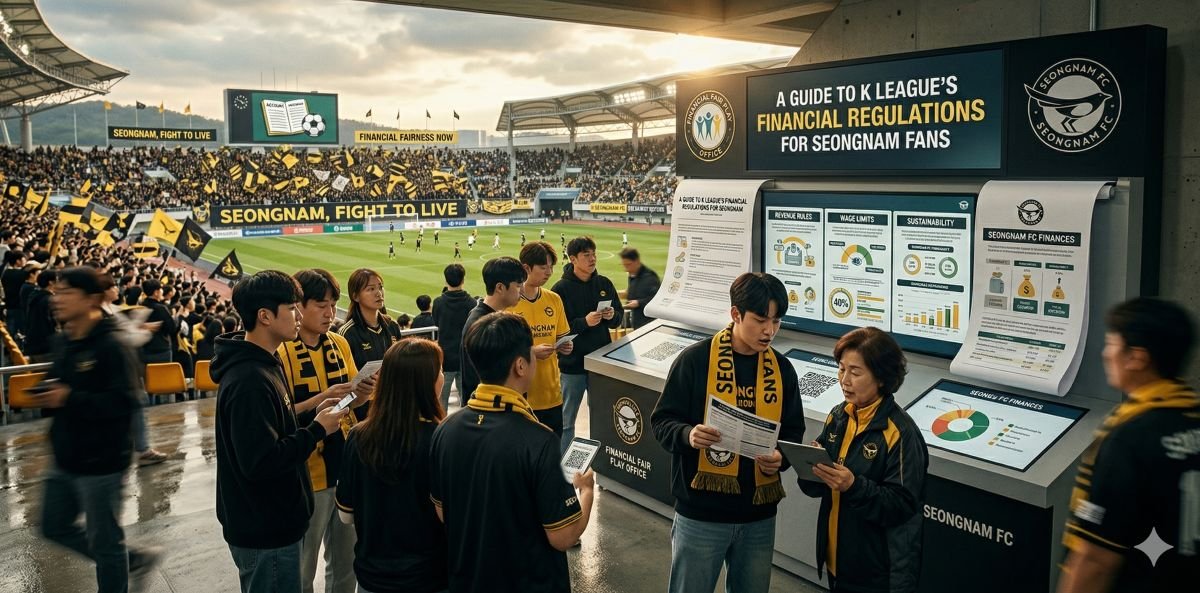
Seongnam FC remains in K League 2 following relegation from the top flight in 2022. As explored in how Seongnam FC’s promotion pathway works under the 2026 K League 2 structure, the club operates under the K League 2 framework, which retains a four-player simultaneous cap and maintains slightly different squad size rules than K League 1.
The structural implication for clubs like Seongnam is that the gap in squad-building tools between K League 2 and K League 1 has widened. Any club earning promotion into K League 1 from 2027 onward — once the league expands from 12 to 14 teams — will enter a transfer market where top-flight rivals can build substantially larger foreign player depth. That competitive reality does not change what earns promotion — results and points do — but it does sharpen the adjustment period that newly promoted clubs must navigate.
The 2026 foreign player overhaul is, in that sense, both an opportunity and a structural shift. For clubs already in K League 1 with the financial resources to act, it opens new recruitment pathways. For clubs working toward the top flight, it raises the baseline of what they will face when they arrive.