
The agreement between the International Olympic Committee and JTBC, awarding the Korean broadcaster exclusive media rights for the Olympic Games from 2026 through 2032, was finalized through a competitive tender process that the IOC described as reflecting JTBC’s innovative broadcast plan and demonstrated commitment to Olympic values. The deal covers the Milano Cortina 2026 Winter Games, the Los Angeles 2028 Summer Games, and subsequent editions through 2032.
On paper, it is a straightforward commercial rights agreement between an international governing body and a domestic broadcaster. In practice, it represents one of the most consequential structural shifts in Korean sports media in decades — and the consequences are already visible in how millions of Koreans experienced the 2026 Winter Olympics.
The Architecture of the Deal
The IOC agreement with JTBC grants rights across all media platforms, with a specific mandate that at least 200 hours of Olympic Games coverage and 100 hours of Olympic Winter Games coverage must appear on national coverage television channels. JTBC committed to broad coverage across its linear, digital, and social media platforms, and to supporting the IOC’s year-round engagement objectives with younger audiences through the Olympic Channel.
JTBC’s media family — which includes JTBC2, JTBC3 FOX Sports, and JTBC Golf — gives the broadcaster a multi-channel infrastructure capable of distributing different sports and formats simultaneously. From a pure broadcast capacity standpoint, the organization has the technical means to deliver comprehensive Olympic coverage.
The IOC’s stated rationale for selecting JTBC over the existing consortium model centered on innovation and youth engagement. JTBC’s pitch emphasized digital-first delivery, direct fan relationships, and content formats designed to reach audiences who do not consume sport through traditional linear television.
What the Korea Pool Model Was and Why It Mattered
To understand what changed, it helps to understand what existed before. For decades, major international sports rights in South Korea were negotiated through the Korea Pool — a cooperative arrangement in which KBS, MBC, and SBS approached rights acquisitions collectively. The model distributed both the cost and the reach of major events across the three terrestrial broadcasters, each of which operates free-to-air channels accessible to effectively all Korean households.
Under the Korea Pool framework, the Olympics and World Cup were events that any Korean with a television could watch without additional cost or subscription. Coverage was not contingent on having a cable package, a streaming subscription, or a compatible device. The three networks competed on production quality and commentary rather than on access itself.
JTBC’s decision in 2019 to exit the Korea Pool and negotiate directly with the IOC broke that model. The broadcaster secured exclusive rights through a high-value independent bid, paying rates that the three terrestrial networks — already under significant financial pressure from declining advertising revenue — said they could not match and cannot now afford to pay as resale fees.
The 2026 Winter Olympics as a Case Study
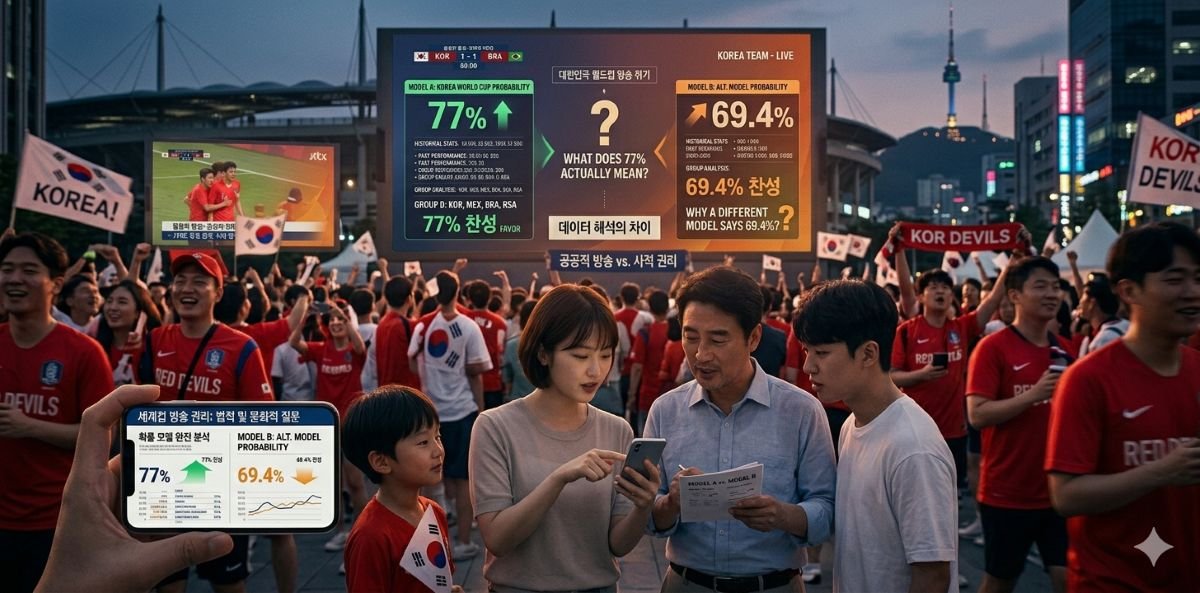
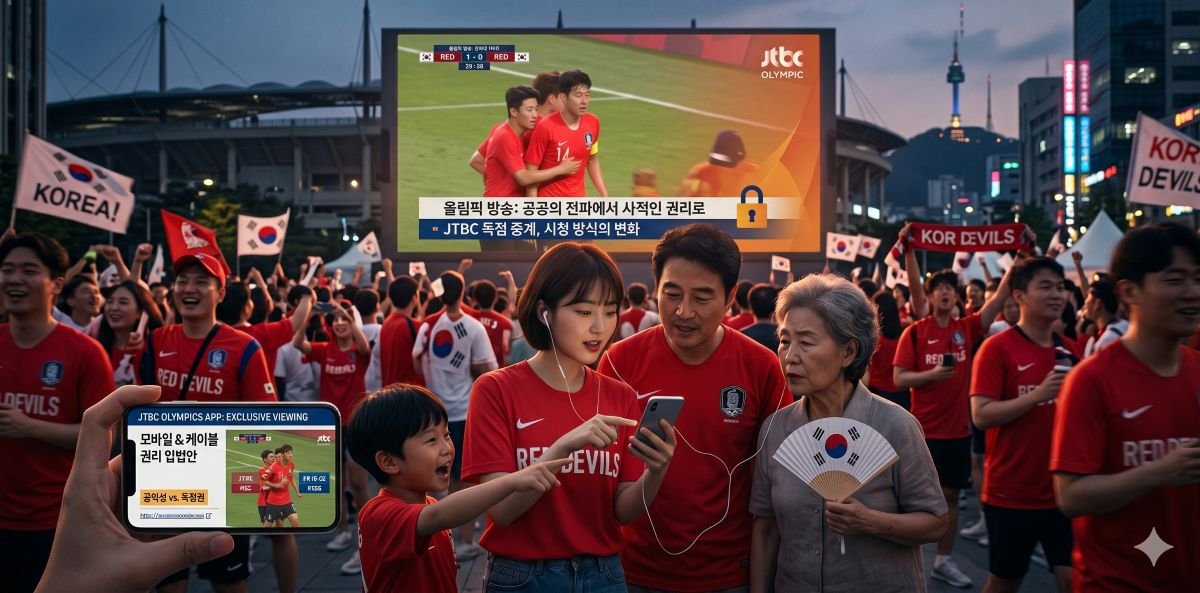
The practical outcome became visible in February 2026. With resale negotiations between JTBC and the terrestrial broadcasters having collapsed, the Milano Cortina Winter Games aired exclusively on JTBC’s platform. The opening ceremony drew a 1.8 percent viewership rating — a number that reflects not lack of interest in the Olympics but lack of access to the channel carrying them.
For fans in Seongnam and across the Gyeonggi-do region, this was not an abstract policy outcome. It was a direct experience of exclusion from a national cultural event. The 200-hour linear television mandate in the IOC agreement was technically met. But the channel meeting that mandate was not one that all households could receive without a paid subscription.
The gap between the letter of the access requirement and the lived reality of viewers in mid-sized cities and regional communities is precisely what the current legislative debate around universal viewing rights is attempting to address. The Broadcasting Act amendment bill currently under consideration would define universal broadcasting access as coverage available in real time without additional cost burden, and would require 95 percent household reach for designated national events.
For a fuller understanding of how the K League and Korean domestic sports have navigated the relationship between broadcasting rights, league governance, and fan access at the regional level, the analysis at Seongnam Insider on legal battles over sports broadcasting in Korea provides directly relevant context on how these tensions have developed across different sports properties.
The Structural Question the Deal Raises
The JTBC Olympic rights agreement is not a villain’s story. It is the predictable outcome of a commercial rights market operating under competitive pressure, combined with a regulatory framework that had not anticipated the scenario it now faces. The IOC received a strong bid. JTBC invested in a long-term partnership. The existing legal architecture had no mechanism to compel a different outcome.
What the deal has done is clarify, with unusual sharpness, the difference between access as a market outcome and access as a civic entitlement. For regional communities across Gyeonggi-do where infrastructure gaps mean digital alternatives are less reliable, that distinction matters in concrete terms.
For broader context on how broadcasting policy frameworks evolve in response to market developments and why regulatory formalization tends to follow rather than anticipate structural shifts, 시스템 운영의 공식화와 규칙 투명성의 구조적 진화 offers structural framing on the institutional dynamics at work in situations exactly like this one.