
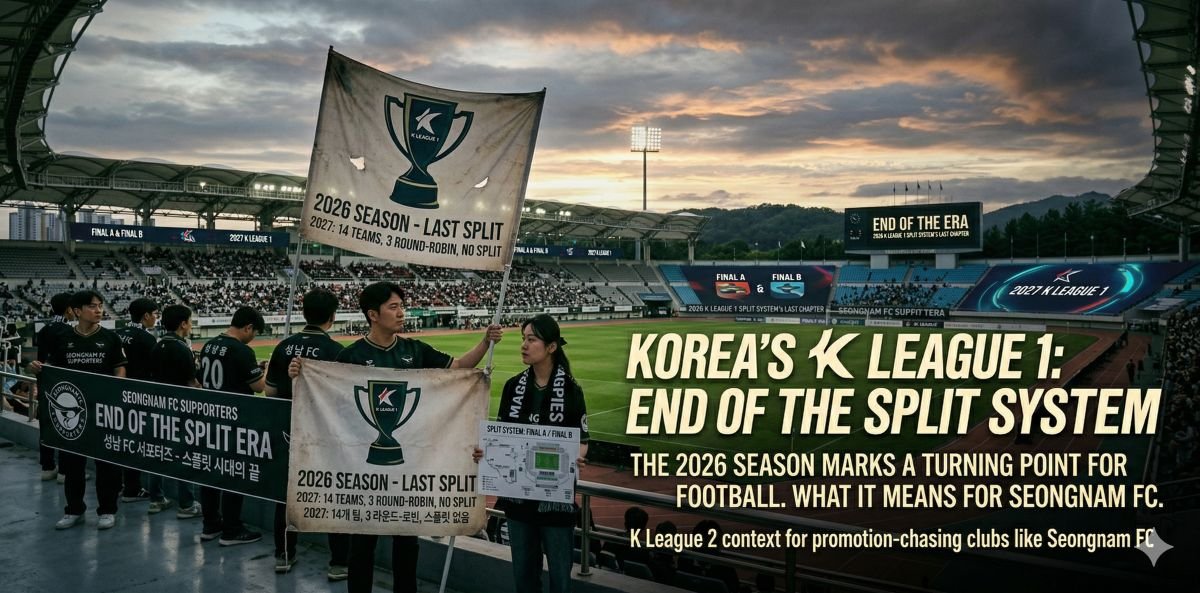
The 2026 K League 1 season marks the end of an era. The split system — the format that divides the league into Final A and Final B groups after the regular round — will be retired after this season concludes. From 2027, K League 1 expands to 14 teams and moves to a full three round-robin structure with no split. For Seongnam FC supporters following the club’s push for promotion through K League 2, understanding how the current system works and why it is being phased out is essential context for reading this season.
How the Split System Was Built
The split system was introduced in 2012 when K League 1 operated with 16 teams. It moved to a 14-team structure in 2013, then settled into the 12-team format it has maintained since 2014. The core mechanism divides clubs after the regular round based on their standings. The top six sides enter Final A, where they compete for the title, AFC Champions League places, and safety. The bottom six enter Final B, where the primary stakes are avoiding relegation.
The design logic was straightforward: keep competitive pressure meaningful for more clubs deeper into the season. A team outside the top six still has something to fight for in Final B, while clubs in Final A cannot coast once the split is confirmed. On paper, the format addressed a common problem in leagues where the title and relegation races lose tension before the season ends.
Why the Format Is Being Retired
Despite its intentions, the split system accumulated sustained criticism over its years of operation. The method by which regular-season points carry over into the final rounds created confusion around standings and perceived fairness. The unequal number of matches between groups introduced imbalances in scheduling. More structurally, a 12-team league produces a limited volume of fixtures, which constrains both competitive density and broadcast appeal across a full season.
The replacement format addresses these problems directly. Fourteen teams competing across three full round-robins produces significantly more matches, maintains consistent standings throughout the season, and removes the visual and administrative complexity of a mid-season split. The final table reflects cumulative performance across the entire campaign rather than a segmented structure. For sports analysis purposes, a format without a split generates cleaner data across a longer competitive window, which matters for how performance trends are evaluated across a season.
What This Means for K League 2 and Seongnam FC
Seongnam FC enter the 2026 K League 2 season under head coach Jeon Kyung-jun with a clear objective: finish in the top two. First and second place in K League 2 earn automatic promotion to K League 1. That promotion target is the lens through which this entire season should be read. A full breakdown of how the promotion and relegation system works in 2026 is available in this guide for Seongnam FC fans.
The 2026 K League 2 season also introduces a structural change of its own. For the first time, promotion and relegation between K League 2 and the K3 League becomes a formal mechanism. The bottom-placed K League 2 club will face the K3 League champion in a single-match playoff. This means competitive pressure exists at both ends of the K League 2 table simultaneously. No club can treat the lower half of the standings as safe ground. The league-wide tension this creates is a meaningful shift from previous seasons.
For a deeper look at how data and context shape the way competition formats are evaluated across Korean football, this analysis from Seoul Monthly examines the methodology behind sports structural assessment.
The Final Season of a Format
When the 2026 K League 1 season ends, the split system goes with it. Final A and Final B will no longer exist as categories. The clubs that spent more than a decade operating within this structure will enter 2027 under entirely different competitive conditions.
For Seongnam supporters, the timing carries particular weight. If the club secures promotion through K League 2 this season, they will be entering a K League 1 that is itself preparing for transformation. Understanding the format being left behind is part of understanding the one being built in its place.
Format shapes outcome. A league that splits its clubs mid-season produces a different kind of champion than one that runs its full course uninterrupted. Korean football is choosing the latter from 2027 onward, and 2026 is the last season to watch the former play out in real time.