
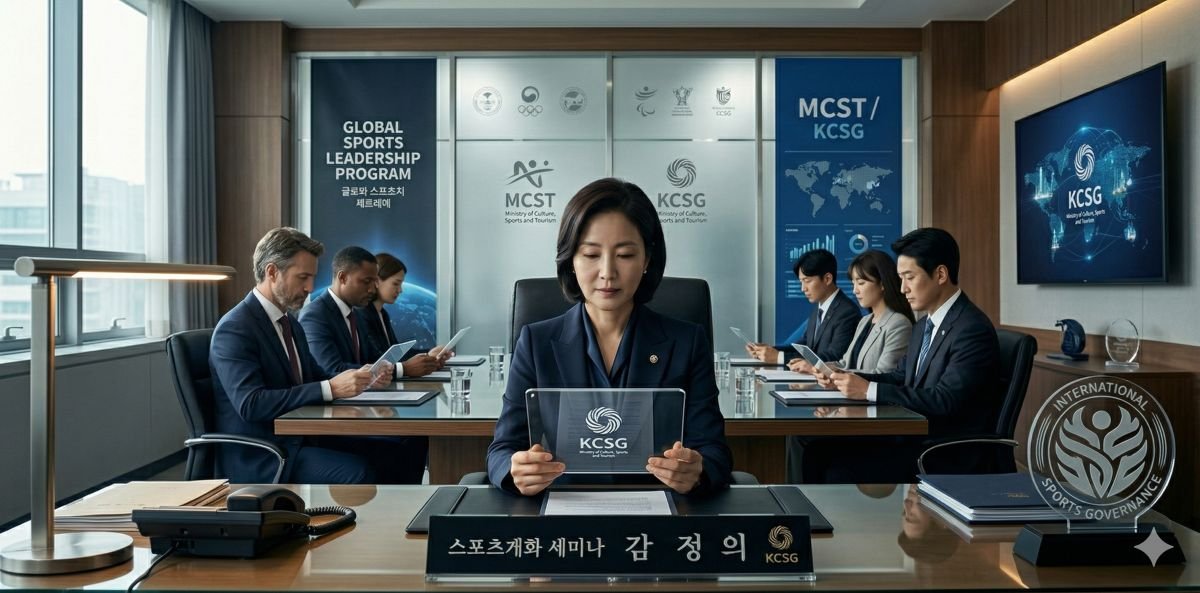
South Korea’s Ministry of Culture, Sports and Tourism has launched a program to systematically train high-level personnel targeting senior positions in international sports organizations — a move that is part of a national strategy to convert on-field performance into institutional influence beyond the arena.
The Program’s Background
The Ministry of Culture, Sports and Tourism announced the establishment of a Global Sports Leadership Course in partnership with the National Sports Promotion Foundation. Recruitment for the first intake runs from April 8 to 30. The program’s stated purpose is to develop high-level human resources in the international sports sector, targeting sports administrators and athletes, international judges, and government and corporate officials aiming for senior positions in international sports organizations.
There is a clear premise behind this program. Korea has consistently placed at the top of medal tables at the Olympics and World Championships, demonstrating world-class performance on the field of play. However, the Ministry’s assessment is that Korea’s institutional standing within the International Olympic Committee, international federations, and other global sports organizations falls significantly short of what that performance record warrants. The election of Won Yoon-jong as an IOC Athletes’ Commission member represents meaningful progress in this context — but it also confirms that Korea’s on-field achievements have outpaced its institutional influence.
The Athlete-Preference Structure — Designed Around How the IOC Actually Works
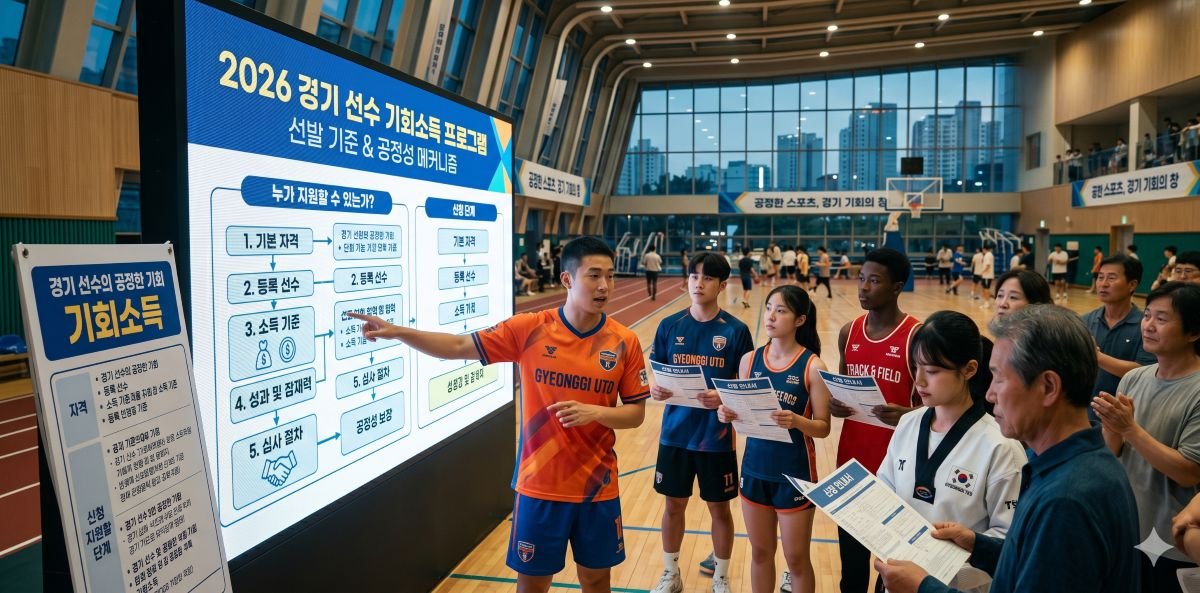
The eligibility and financial support structure of the Global Sports Leadership Course is designed to reflect the actual power dynamics of international sports organizations. The fact that approximately 40 percent of IOC members are former Olympians underpins the program’s core design logic.
Specifically, Olympic and World Championships winners receive full coverage of education expenses. Asian Games winners receive half of education expenses. Sports-related career background and job suitability are used as evaluation criteria, signaling that this is not a general administrative training course but a structured pathway designed to move individuals with direct competitive experience into the decision-making architecture of international organizations.
This structure illustrates clearly how fairness can carry different meanings across different institutional contexts. The analysis of why fairness means different things across different regions and institutions provides useful context for understanding why this program has set competitive athletic careers as a preferred qualification. The principle that individuals with on-field credibility carry greater institutional trust is not a new invention — it is how international sports organizations have long operated.
What Won Yoon-Jong’s IOC Election Opened Up
One of the direct catalysts for this program is the election of Won Yoon-jong to the IOC Athletes’ Commission. A former national bobsled team member, Won’s election marked a symbolic milestone in Korea’s entry into international sports governance.
The Ministry interpreted this development as evidence that Korea’s on-field achievements are running ahead of its institutional influence. In other words, the ability to win medals and the ability to participate in policy decisions within international sports organizations are distinct competencies — and the latter requires systematic development. The Global Sports Leadership Course is the institutional response to that gap.
Reading This Policy Through the Lens of Seongnam
Seongnam occupies a distinctive place in the history of Korean civic sports culture. Seongnam FC, as a civic club, represents a case study in how the relationship between local communities and sports institutions should function. Stronger Korean representation in international sports governance has indirect but real implications for local sports ecosystems like Seongnam’s. The policy decisions made at the IOC and international federation level filter down into domestic sports institutional design, and from there into how regional clubs and community sports cultures are structured and resourced. Seongnam Insider’s coverage of local sports policy and civic community context provides a useful reference for understanding what this national-level governance discussion means at the community level.
International Sports Governance — Why Institutional Access Matters
Influence within international sports organizations is not simply about securing favorable treatment for one’s own athletes. Holding committee positions and executive board seats at the IOC, FIFA, FIBA, World Athletics, and similar bodies means having a seat at the table when decisions are made about competition rules, host city selection, anti-doping policy, and broadcast rights distribution — decisions with strategic and financial implications that extend far beyond any single event.
Korea’s rationale for strengthening its institutional foothold in this space is clear. World Cup qualification confirmed, Asian Games medal competition ongoing, sustained performance across Olympic disciplines — converting this accumulated on-field capital into genuine decision-making authority within the international sports order requires personnel with competencies spanning administration, diplomacy, law, and media, positioned inside international organizations.
Academic background on Olympic governance and the structure of international sports organizations is available through the International Olympic Committee’s official academic resources and Olympic Studies Centre. Analysis of IOC member composition, the role of athletes’ commissions, and national participation patterns in governance provides a meaningful reference point for understanding why this program has been launched at this moment.
Institutions Shape Culture
More important than how many international organization executives this program produces in the short term is the fact that it establishes international governance participation as a legitimate career pathway within Korean sports culture.
When it becomes natural for elite athletes to move from retirement into roles representing Korean sports interests within international organizations, Korea’s institutional asset base grows alongside its competitive performance. Building a structure in which on-field achievements translate into institutional standing beyond the arena — this is the direction of change the program is designed to produce.
Korea has long known how to win. What this program signals is that the country has decided it also needs to learn how to govern.