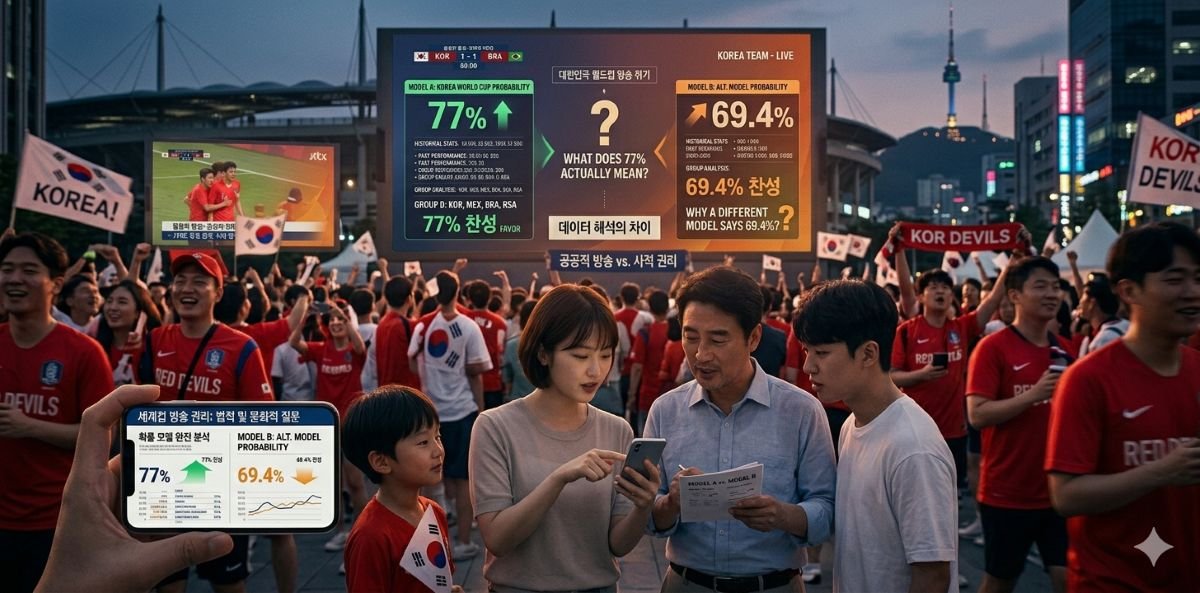


Sports feel knowable. The teams are familiar. The statistics are available. The form guides, injury reports, and tactical analyses are published and accessible to anyone who wants them. The sheer volume of structured information that surrounds modern professional sport creates an environment in which confident predictions feel not just possible but well-founded — supported by evidence, grounded in data, informed by expertise.
This feeling of certainty is one of the most consequential cognitive errors that anyone engaging with sports outcomes can make. Understanding why certainty is overestimated in sports requires examining the specific mechanisms that make sport feel more predictable than it is — and why those mechanisms operate with particular force in a domain where information is abundant, emotional investment is high, and the desire for reliable prediction is strong.
The Illusion of Knowledge
The first mechanism is what behavioral economists call the illusion of knowledge: the tendency for more information to increase confidence without proportionally increasing accuracy. This effect is particularly well-documented in domains where information is abundant but outcomes are genuinely uncertain.
Research on overconfidence bias demonstrates the pattern clearly. In one study, groups of people with varying levels of domain expertise made predictions and reported their confidence levels. As participants were given more information, their confidence increased substantially — but their accuracy did not improve to match it. The additional information created the subjective experience of being better-informed without the objective improvement in predictive power that experience seemed to promise.
Sports is an ideal environment for this dynamic. A participant who has studied team statistics, analyzed recent form, reviewed head-to-head records, and read tactical analysis feels, reasonably, that they are better positioned to predict an outcome than someone who has not done any of this work. That feeling is partially accurate — informed analysis does provide some edge over pure guessing. But the subjective confidence that detailed information generates tends to outrun the objective edge it provides. The gap between felt certainty and actual predictive accuracy is persistent and large.
Why Sports Feel More Predictable Than They Are
Beyond the illusion of knowledge, sports have specific structural features that make outcomes feel more predictable than the underlying variance actually supports.
Narrative coherence is the most powerful of these. Sports outcomes are reported and discussed in narrative terms: a team was dominant, a player was inspired, a tactical adjustment was decisive. These narratives are retrospectively compelling — they make sense of outcomes after the fact in ways that feel like they should have been predictable before it. Hindsight bias, the well-documented tendency to perceive past events as more predictable than they actually were, is systematically reinforced by sports reporting. The story of why a result happened is constructed after the result is known, and it almost always sounds like it had to happen that way.
This retrospective intelligibility creates a false sense of prospective predictability. Because the explanation of what happened always sounds coherent after the fact, the explanation of what will happen sounds similarly coherent before it. The same narrative structures that make sports outcomes feel understandable in hindsight make predictions feel well-founded in foresight — even when the underlying uncertainty has not meaningfully changed.
Research on sports wagering supports this directly. Experimental evidence finds that participants consistently assign higher subjective winning probabilities to sports predictions than to neutral lotteries with mathematically identical odds. The familiarity and narrative structure of the sports domain generates a premium in perceived certainty that has no basis in actual predictive accuracy. As analyses of the relationship between probability, uncertainty, and what can genuinely be predicted in competitive systems document, the gap between what participants feel they can predict and what the variance structure of competitive outcomes actually allows is one of the most consistent findings in behavioral research on sports.
The Expert Problem
Expertise in sport — genuine, deep, hard-won expertise — does not solve this problem. In many cases, it makes it worse.
Research consistently shows that domain expertise increases overconfidence more than it increases accuracy. Experts know more real information about the domain, which increases the felt basis for confident prediction. But competitive sports outcomes are influenced by variables that no amount of domain knowledge can reliably capture: individual performance variance on a given day, the specific interactions of two complex tactical systems, injury effects that are not publicly known, and the inherent randomness of events like set pieces, individual moments of skill, and referee decisions. None of these are systematically captured by historical statistics or tactical analysis, regardless of how sophisticated that analysis is.
The implication is that the expert who predicts sports outcomes with high confidence is exhibiting the same overconfidence bias as the casual observer — just with a more elaborate supporting rationale. Overconfidence bias, as behavioral research consistently demonstrates, is the most prevalent cognitive error in prediction across virtually every domain, and it does not diminish with expertise. In some contexts, it increases.
What Genuine Uncertainty Looks Like in Practice
Understanding why certainty is overestimated in sports does not produce a simple corrective. The variance in competitive sports is real, it is large, and it does not resolve into predictability with more analysis. A team that wins 60% of its matches will still lose 40% of them. A heavily favored side will lose more often than participants who treat the favorite’s form as near-guarantee expect. Upsets are not aberrations — they are the statistical consequence of the variance inherent in competitive outcomes, occurring at roughly the rate that the underlying probabilities predict.
The most practically useful response to this reality is calibrating confidence to the actual variance of the domain rather than to the subjective feeling of knowledge that familiarity and narrative coherence create. In quantitative terms, this means treating probabilities as probabilities — acknowledging that a 70% probability outcome fails 30% of the time — rather than treating high probability as certainty. In qualitative terms, it means remaining genuinely uncertain about specific match outcomes even after thorough analysis, because thorough analysis does not eliminate the variance that makes outcomes uncertain.
Final Thoughts
Certainty is overestimated in sports because information abundance creates the illusion of knowledge, narrative coherence makes past outcomes feel inevitable, and expertise increases confidence faster than it increases accuracy. None of these mechanisms are moral failures. They are structural features of how human cognition engages with probabilistic domains that offer rich narrative framing and high emotional stakes.
Recognizing them is the beginning of engaging with sports outcomes more realistically — not to eliminate prediction, but to hold it with the appropriate degree of confidence that the underlying uncertainty actually warrants.
The feeling of certainty and the fact of certainty are two very different things. Sport is where that difference has the highest cost.