

The structure of a sports market is not designed by analysts — it is imposed by the rulebook of the sport it covers.
This is one of the less obvious truths about how sports markets are built and why they behave so differently from one discipline to the next. A football market and a basketball market covering events happening simultaneously on the same day are not variations of the same product. They are structurally distinct constructs shaped by entirely different sets of rules governing how play progresses, how scoring occurs, how time is managed, and how the competitive balance of a match can shift. Every one of those rule differences has a downstream consequence for how markets are designed, how odds are calculated, and how participants experience the activity of engaging with them.
Understanding how rule differences shape markets requires moving beyond the surface similarities — both involve teams, both have outcomes, both generate odds — and examining the mechanical layer underneath, where sport-specific rules translate directly into market-specific constraints and opportunities.
Scoring Frequency and Market Granularity
The most immediate way that sport rules influence market structure is through scoring frequency. How often points are scored in a typical match determines how much granular market variety is possible and how quickly odds must move to remain accurate.
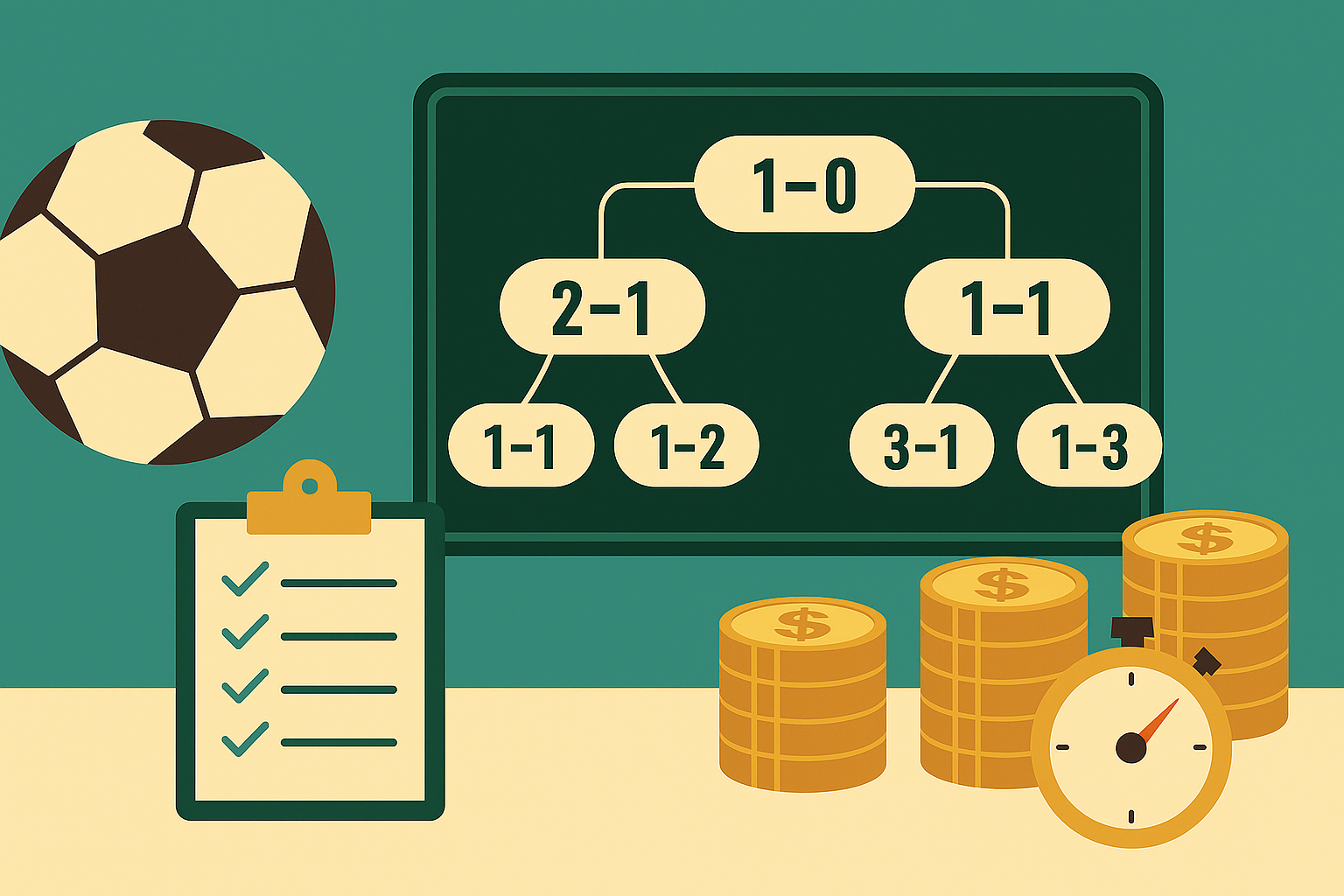
Football operates at low scoring frequency. A ninety-minute match might produce two or three goals, and significant stretches of play can pass without any scoreline change. This low-event environment has historically made certain market types structurally simpler — correct score markets involve a relatively small number of plausible outcomes, and the match result market remains stable across long stretches of play. The tradeoff is that each individual scoring event carries enormous weight in probability terms, causing sharp odds movements when a goal occurs.
Basketball operates at extremely high scoring frequency. Scores change dozens of times per match, and the lead can shift multiple times within a single minute. This environment makes certain market formats unstable — a correct score market would be practically unusable — while enabling others. Spread markets, quarter-by-quarter totals, and point differential markets are natural products of a high-frequency scoring environment because the volume of scoring events provides enough data for meaningful within-match probability modeling.
The rule that determines how points are scored — and how often that rule can be triggered — is therefore not just a feature of the sport. It is the primary input that determines what kinds of markets are structurally viable.
Time Structure and In-Play Dynamics
How a sport manages time is the second major rule dimension that shapes market behavior, and it operates differently from scoring frequency in ways that are often underappreciated.
Continuous-time sports — football, rugby, hockey — run a clock that does not stop for most stoppages. This means that the time remaining in a match is always a meaningful variable in probability calculations, and that the real-time odds model must continuously account for the diminishing window available for scoreline changes. A team trailing by one goal with seventy minutes remaining faces a fundamentally different probability environment than the same team trailing by the same margin with five minutes left. The continuous clock makes time a live variable that interacts with every other match state input.
Stoppage-time sports — American football, basketball, baseball — manage time very differently. American football and basketball feature frequent clock stoppages that extend the practical duration of late-game sequences. A two-minute drill in American football can take fifteen minutes of real time. This characteristic creates a market dynamic where the final minutes of a match are disproportionately eventful relative to their clock-time representation, and where late-game odds behavior diverges significantly from what a simple time-remaining model would predict.
Baseball has no clock at all. Match duration is determined entirely by outs, making time-based probability modeling inapplicable in its usual form. As explored in Gwangju Insider’s detailed examination of how sport-specific rule differences flow through to market structure, the absence of a time constraint in baseball produces a market environment where momentum and sequencing variables carry more weight than they do in clock-governed sports — because there is no approaching deadline to compress probability distributions.
Roster Rules and Substitution Logic
Rules governing player participation and substitution create another layer of market complexity that varies significantly across sports. In football, the limited substitution allowance — three or four changes per match — means that the departure of a key player is a high-impact, low-frequency event that triggers immediate odds recalculation. The injury of a first-choice goalkeeper or a leading scorer is a material match-state change, and markets adjust accordingly.
In rugby league, rolling substitutions mean that player availability is a more fluid variable throughout the match. In cricket, the sequential batting structure means that the dismissal of each individual batsman is a discrete scoreline event with its own market implications. In tennis, no substitution is possible at all — the entire market rests on the performance trajectory of two individuals, making fatigue, injury signals, and psychological momentum more structurally significant than in any team sport.
These roster rules shape not just which markets are offered but how sensitively those markets must respond to personnel events during play. A sport with high substitution flexibility requires a different sensitivity model than one where the starting lineup is largely fixed.
Outcome Structures and Market Design Constraints
Perhaps the most architecturally significant way that rules shape markets is through the range of possible match outcomes. A sport that allows draws produces a three-way result market. A sport with no draw mechanism — resolved by overtime or shootout — collapses to a binary outcome but introduces additional market categories around the resolution method itself. A sport where margin of victory varies enormously produces a natural spread market. A sport where most matches are decided by narrow margins produces a different distribution of value in handicap markets.
How Draws Reshape the Entire Probability Model
The presence or absence of a draw outcome restructures the entire probability model that underlies a market. In football, all three outcomes — home win, draw, away win — must sum to certainty. The draw probability, which fluctuates with match state, continuously compresses and expands the probability space available to the two win outcomes. This three-way dynamic creates a more complex odds surface than a binary sport, and it means that in-play odds management in football requires more continuous recalibration than in sports where one team’s gain is the other team’s loss with no third possibility.
This is why direct comparisons of odds structure across sports frequently mislead. The rules governing what outcomes are possible are not background context — they are the mathematical foundation on which every probability estimate is built, as examined in Seongnam Insider’s framework for understanding how rule differences shape the structure of sports markets.
Penalty and Foul Systems
Rules governing penalties, fouls, and disciplinary events introduce a further layer of market sensitivity that is specific to each sport’s regulatory structure. In football, a penalty kick is a high-probability scoring event that dramatically shifts match odds — a penalty awarded to a trailing team late in a match is a structural discontinuity in the probability surface. In rugby, penalty kicks are more frequent and cover a wider range of positions, making them a higher-volume but lower-impact event category.
In ice hockey, power plays created by penalties alter the scoring probability environment for a defined time window rather than producing a single high-leverage event. In basketball, foul accumulation affects late-game strategy in ways — intentional fouling to stop the clock, bonus situations — that have no direct equivalent in other sports and require sport-specific modeling to price correctly.
Each of these penalty and foul systems creates a distinct category of within-match event that must be incorporated into live market logic. The rules define what the event is. The market must determine what it means for remaining outcome probabilities and price accordingly.
Why Rule Knowledge Is Market Knowledge
The implication of all of this is that understanding a sport’s rules at a mechanical level is prerequisite to understanding why its markets behave as they do. Participants who approach sports markets as generic probability exercises — interchangeable vehicles for outcome prediction — will consistently encounter market behaviors that appear arbitrary until the underlying rule structure is examined.
The odds that seem puzzling in a specific match state almost always become explicable once the rule governing that state is understood. The market type that exists in one sport but not another almost always traces back to a specific rule feature that makes it viable or unviable. The rule differences between sports are not administrative detail. They are the architecture that the entire market structure is built on top of.