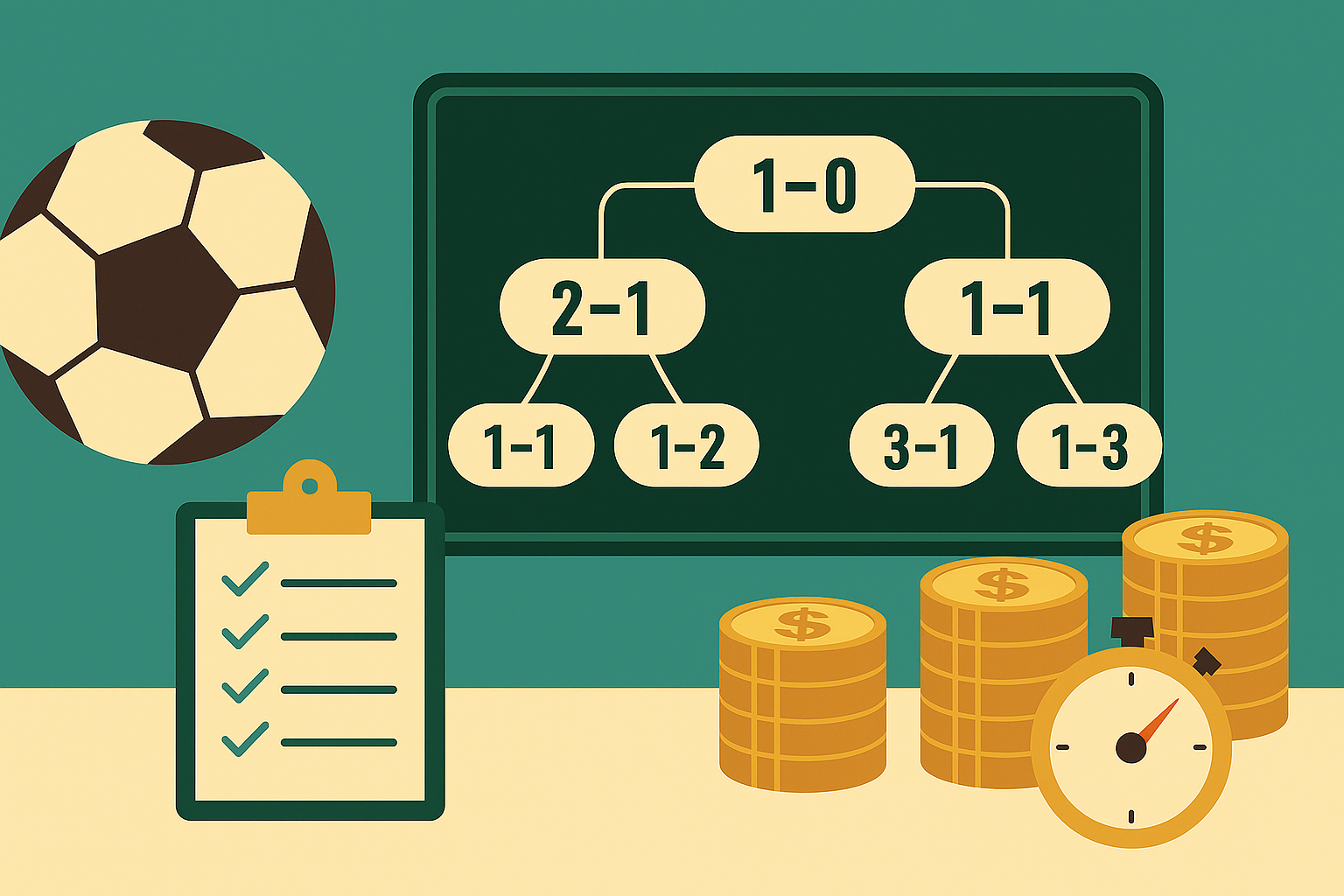


Humans misjudge risk in repeated decisions because the brain is wired to find patterns in random events rather than looking at long-term math. Instead of treating each event as a separate chance, people often believe that what happened in the past will influence what happens next. This leads to two common mistakes: thinking a result is “due” to change because it has happened many times, or thinking a “streak” will continue forever. These errors happen because humans focus on short-term results, which makes the natural ups and downs of life feel like they have a deeper meaning.
The Search for Meaning in Randomness
When a person makes the same choice many times, they start to build a story in their head. If a person is playing a game of chance and loses four times in a row, they often feel that a win is coming soon. This is known as the Gambler’s Fallacy. The brain struggles to accept that a coin or a deck of cards has no memory. Each time a coin is flipped, the chance of it landing on heads is exactly 50 percent, regardless of what happened five minutes ago.
This pattern-seeking behavior was useful for our ancestors when they were looking for food or avoiding predators. In those cases, seeing a pattern could save a life. However, in modern life, especially in finance or games, this trait causes people to misjudge how much risk they are taking. They start to trust their “gut feeling” more than the actual percentages.
What the Experts Say about Human Error
Psychologists have spent decades studying why smart people make these simple mistakes. Daniel Kahneman, a researcher who won a Nobel Prize for his work, explains that humans have two systems of thinking. System 1 is fast and emotional, while System 2 is slow and logical. When we make repeated decisions, we often rely on System 1 because it is easier.
Daniel Kahneman noted that we are prone to overestimate how much we understand about the world and to underestimate the role of chance. This means we think we are making progress or learning a secret when we are actually just experiencing luck. Another researcher, Amos Tversky, argued that people do not follow the rules of probability. Instead, they use mental shortcuts that lead to predictable errors.
Annie Duke, an author who focuses on the science of decision making, calls the biggest mistake “resulting.” This happens when people judge a choice by its outcome. If a person makes a risky bet and wins, they think they made a good decision. If they make a safe bet and lose, they think they made a bad decision. Annie Duke suggests that the quality of a decision is separate from the result. A good decision can still lead to a bad result because of variance, which is the random noise in any system.
Data on Risk and Confidence
To see how these errors work in real life, we can look at how people change their behavior during a series of events. In a study of risk perception, researchers tracked how much people were willing to risk after a series of wins or losses. The data shows that people rarely stay objective.
| Previous Result | Average Risk Increase | Perception of Next Event |
| 3 Wins in a row | 12 percent | Feeling “Hot” |
| 3 Losses in a row | 18 percent | Feeling “Due” |
| Mixed Results | 1 percent | Neutral |
This data shows that both winning and losing streaks make people more likely to take bigger risks. When people win, they feel they have a special skill. When they lose, they feel the world “owes” them a win. In both cases, the actual risk of the next decision has not changed, but the person’s perception of that risk has shifted significantly.
The Law of Small Numbers
Another reason for misjudging risk is what researchers call the Law of Small Numbers. This is the belief that a small sample of events should look like the big picture. If a person tries a new investment and it goes up for two months, they might think they have found a perfect strategy. They are trusting a small amount of data as if it were a proven fact.
In reality, two months of data is not enough to prove anything. This is why many people lose money in the stock market or in sports betting. They see a small trend and assume it is a permanent rule. You can learn more about how these probabilities work by visiting the Probability page on Wikipedia.
How to Make Better Decisions
To avoid these mental traps, a person must learn to separate the process from the result. This is not easy because the brain wants to celebrate wins and mourn losses. However, there are a few ways to stay grounded in reality:
Focus on the math: Before making a repeated decision, write down the actual odds. Remind yourself that the previous result does not change these odds.
Keep a journal: Record why you made a decision. If you won but your reason was “I had a feeling,” you should recognize that the win was lucky, not skillful.
Think in groups: Instead of looking at one decision, think about what would happen if you made that same choice 100 times. If the average result is bad, then the single choice is bad, even if you win this time.
By understanding that the brain is a pattern-seeking machine, we can start to catch ourselves when we make these mistakes. We can learn to see variance for what it is, just random noise that has no meaning. When we stop looking for stories in the numbers, we can finally see the true risk that is right in front of us.