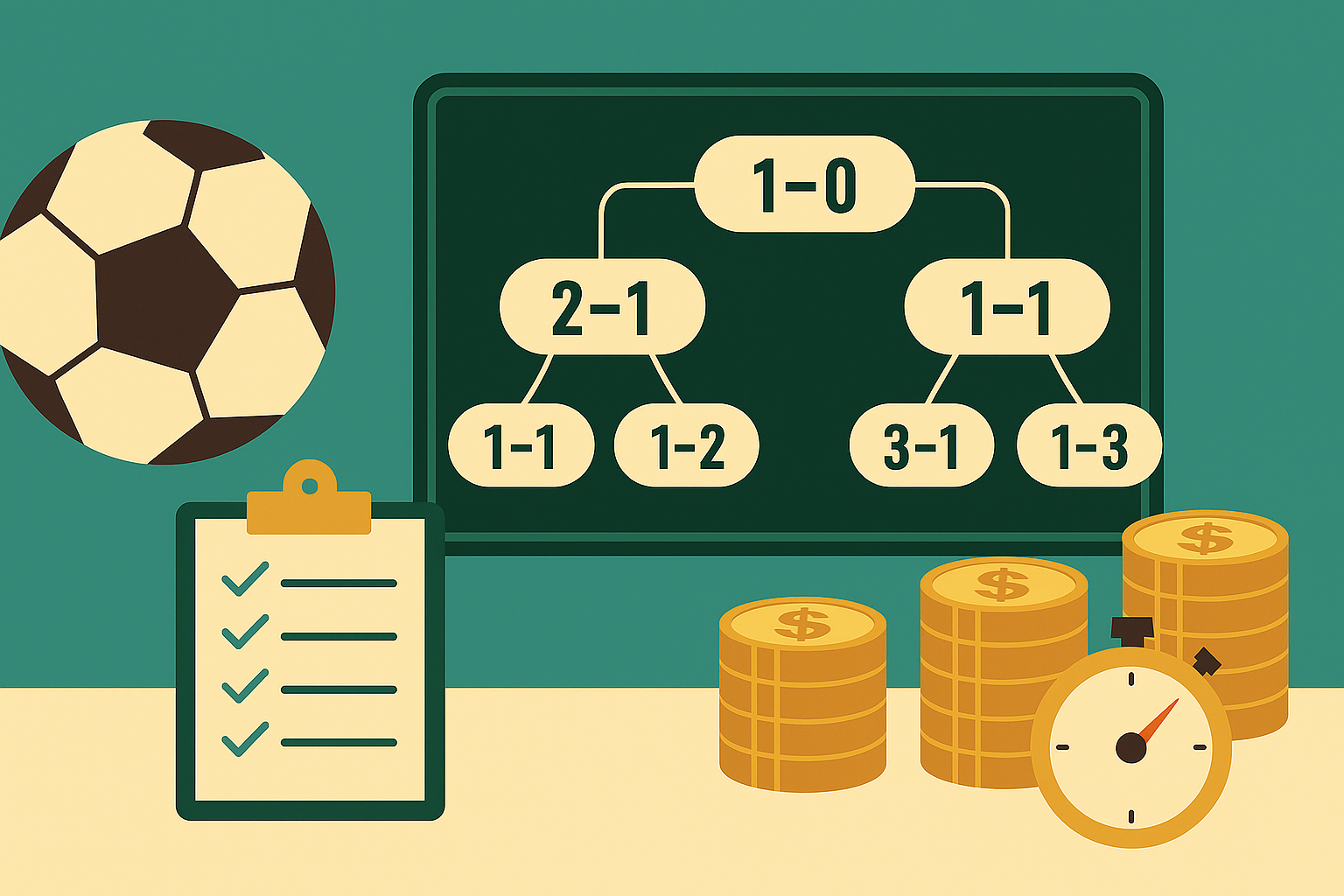


People often make irrational choices about prices when the chance of an event happening is very low. This is because the human brain struggles to process tiny percentages, leading to what experts call small probability errors. Instead of looking at the actual cost and the real risk, many people treat a 1% chance as if it were much larger, which makes them less sensitive to high prices. This error explains why individuals are willing to pay a lot for extended warranties or lottery tickets even when the mathematical value is poor.
The Brain’s Trouble with Tiny Numbers
When we look at a price, we usually think about what we get in return. If a loaf of bread doubles in price, most people will buy less of it because they are sensitive to that change. However, this logic disappears when we talk about rare events. Humans tend to “overweight” small probabilities (Kahneman & Tversky, 2000). This means that in our minds, a very small risk feels like a significant threat, and a very small chance of winning feels like a real opportunity.
Because of this mental glitch, buyers become less sensitive to the price of protection. For example, if a store offers a $50 warranty on a $500 tablet to cover a 1% chance of the screen breaking, the “fair” price should be around $5. Yet, many people pay the $50 without a second thought. They are not paying for the math; they are paying to stop worrying about that 1% chance.
The Insurance and Lottery Effects
This behavior shows up in two main ways: seeking rare gains and avoiding rare losses. In the world of gains, people overpay for “skewed” outcomes, which is basically the [lottery ticket effect]. Research shows that investors often overpay for specific stock options because they focus on the tiny chance of a massive payout rather than the high chance of losing their money (Félix et al., 2019).
In the world of losses, the same error drives the insurance market. Many people buy insurance for small things they could easily afford to replace, like a toaster or a cheap smartphone. Because the probability of the item breaking is so low, our brains cannot accurately judge if the premium is fair. We simply see the “risk” and want it gone.
What the Experts Say
The most famous explanation for this comes from Daniel Kahneman and Amos Tversky, who developed Prospect Theory. They argued that people do not look at absolute wealth but instead focus on changes from a reference point (Barberis, 2013).
Kahneman and Tversky noted that “the overweighting of small probabilities favors both gambling and insurance” (Kahneman & Tversky, 2000). They found that people are generally loss-averse, meaning the pain of losing $100 is much stronger than the joy of gaining $100. Their original research suggested that a loss feels about 2.25 times more painful than a gain of the same size, though newer studies suggest this number is closer to 1.97 (Barberis, 2013).
Hermann Simon, a well-known pricing expert, explains that many customers are unaware of how these price structures are created. He mentions that the “challenge for any seller is to find out what this perceived value is and then price the product or service accordingly” (Simon, 2015). When a seller knows that a buyer is worrying about a small risk, they can set a much higher price because the buyer’s sensitivity to that price has dropped.
Evidence from Research
One interesting study looked at how people react to “at-risk” rewards. Researchers wanted to see if they could use the fear of a small loss to encourage healthy habits. They found that people were 70% more likely to attend a health appointment if they were offered “insurance” to protect a reward they already had, compared to being offered a simple cash payment of the same value (Ozdemir & Morone, 2013). This shows that our desire to protect ourselves against a tiny chance of loss is a much stronger driver than the desire to make a small, certain gain.
Another study on insurance data found that households are often inconsistent with their risks. For instance, the same family might choose a very high level of protection for their home but a much lower level for their car, even if the risks are similar (Barseghyan et al., 2011). This suggests that our price sensitivity is not just about the money, but about the context and how the “small probability” is described to us.
How to Make Better Decisions
To avoid these errors, it helps to slow down and do the math. When offered a price for a “peace of mind” service, ask yourself what the actual chance of the event is. If there is a 1 in 100 chance of something going wrong, multiply the cost of the repair by 0.01. If that number is much lower than the price of the warranty, you are likely overpaying due to a probability error.
By understanding that our brains naturally exaggerate small risks, we can become more sensitive to prices that are designed to exploit our fears. For more information on how these biases work, you can read more about Prospect Theory on Wikipedia.