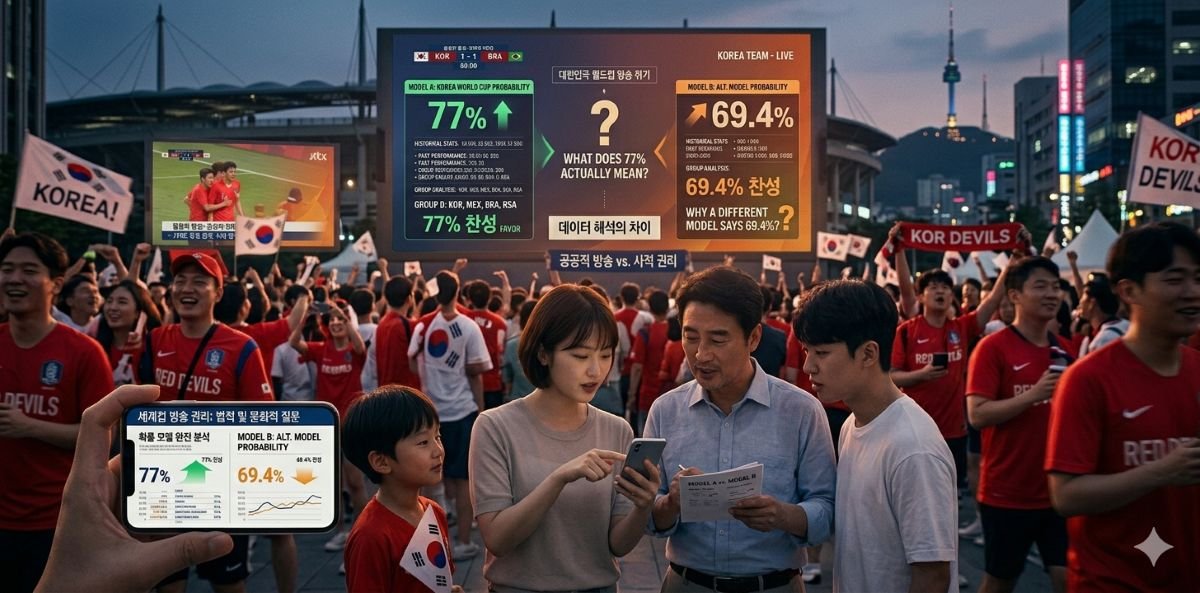


Public bias in sports betting markets happens when a large number of people bet based on their feelings, team loyalty, or recent news rather than looking at the actual math. This behavior causes probability distortion, which means the betting odds no longer show the real chance of a team winning. Because bookmakers want to balance the money on both sides of a game, they change the prices to make popular teams more expensive to bet on. This creates a situation where the “crowd” is often wrong about the true risk, and the unpopular team becomes a better value for those who look at the data.
Why People Bet with Their Hearts
Many sports fans have a favorite team that they follow every week. When it comes time to place a bet, they find it very hard to bet against their own team. This is known as “loyalty bias.” If millions of fans of a popular team, such as the Dallas Cowboys or the Los Angeles Lakers, all bet on their team to win, the betting market becomes heavy on one side.
To fix this, bookmakers move the betting line. If a team should be a 3-point favorite based on statistics, the bookie might move it to 5 or 6 points. They do this to encourage people to bet on the other team. In this case, the probability is distorted because the “public” has pushed the price away from the truth. A fan might think their team is going to win easily, but the math suggests the game will be much closer.
The Problem with Recent News
Another common error is called “recency bias.” This happens when people place too much importance on what happened in the last game or two. If a famous quarterback had a great game last Sunday, the public assumes he will do the same thing this Sunday. They forget about his performance over the whole year.
This creates a “hot hand” illusion. Bettors see a winning streak and believe it will never end. This specific distortion often leads to people overpaying for a bet. When everyone is talking about how a team cannot be stopped, the betting price for that team goes up, even if their next opponent is actually very strong.
What the Data Shows
In a study of betting patterns across several professional sports leagues, a clear trend appears. When more than 70% of the public bets on one team, that team “covers the spread” (meaning they win by more than the predicted points) only about 47% of the time.
| Betting Group | Win Rate Against the Spread |
| Public Favorites (70%+ of bets) | 47.2% |
| Unpopular Underdogs (Less than 30% of bets) | 52.8% |
| Balanced Games | 50.1% |
This data shows that the “wisdom of the crowd” does not always work in sports. Because the public is biased toward favorites and famous players, the underdogs often provide a higher chance of winning money over time. While 52.8% might not seem like a huge difference, in the world of professional betting, it is a significant margin that can lead to profit.
Expert Insights on Market Distortion
Experts who study the economics of sports betting have noticed these patterns for a long time. Steven Levitt, a well-known economist, explains that bookmakers are not just trying to predict the score. He mentions that “the bookmaker’s goal is to set a price that maximizes their own profit, not one that perfectly predicts the outcome.” This means the bookie is actually betting against the public’s biases.
Professional bettors also talk about this. Billy Walters, one of the most successful gamblers in history, has often discussed how the public’s love for “favorites” creates opportunities. He has noted that the public always wants to bet on the favorite, and they always want to bet that there will be a lot of points scored. Because of this, the “under” and the “underdog” are frequently the smarter choices.
Cognitive Bias and the Betting Market
The reason these distortions exist is rooted in how our brains work. Most people are not natural statisticians. We prefer stories over numbers. A story about a legendary player coming back from an injury is more exciting than a spreadsheet showing defensive success rates.
When we hear a good story, our brain experiences a cognitive bias, which is a mental shortcut that leads to mistakes in judgment. In sports, this bias makes us feel like a win is certain when it is actually just a coin flip. This is why markets are so often distorted. The price of a bet is shaped by human emotion, and human emotion is rarely logical.
How to Spot a Distorted Market
If you want to understand if a betting market is distorted, look for “reverse line movement.” This happens when most of the people are betting on Team A, but the bookmakers move the line to favor Team B. This is a sign that “sharp” bettors (professionals who bet large amounts of money) are betting against the public.
When the public is on one side and the professional money is on the other, the professional money is usually right. The professionals are looking for the probability distortion. They know that the public has pushed the price of Team A too high, making Team B a bargain.
Steps to Avoid Public Bias
Making better choices in a betting market requires discipline. Here are a few ways to stay objective:
Ignore the headlines: Sports news is designed to be exciting, not accurate. A “huge comeback” makes for a great story, but it doesn’t change the team’s season-long statistics.
Look at the numbers first: Before you check the odds or the news, look at the team’s data. Decide what you think the line should be, then compare it to the actual market.
Bet against the crowd: If everyone you know is betting on the same team, that is often a sign that the price is distorted.
By understanding how public bias changes the market, you can see past the excitement of the game. You can start to view sports betting as a math problem instead of a guessing game. The goal is to find where the crowd is wrong and where the numbers are right.