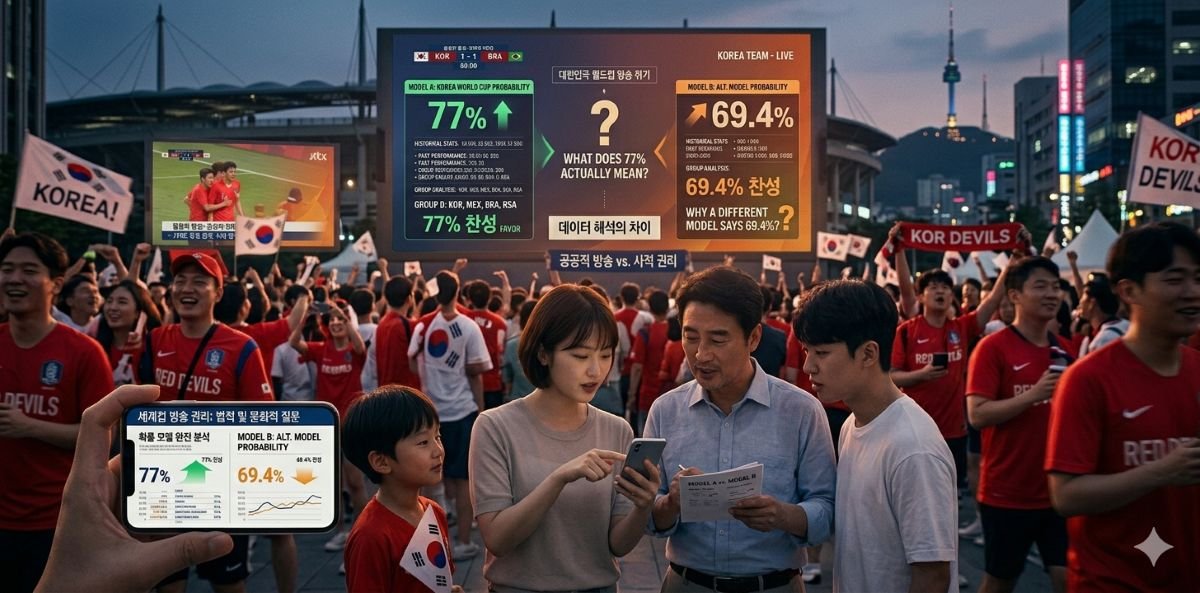


The odds displayed on any market are not the output of a single calculation — they are the compressed result of a process that begins with human judgment, passes through quantitative modeling, and ends with the continuous pressure of collective participant behavior.
Most people encounter odds as finished products. A number is presented, a probability is implied, and a decision is made. The process by which that number arrived at its current value — the layered sequence of inputs, adjustments, and market forces that produced it — is almost entirely invisible from the participant’s side. That invisibility matters, because odds that appear authoritative are actually estimates in motion, shaped by forces that change from the moment a market opens to the moment it closes.
Understanding how odds take shape requires following that process from the beginning — from the initial assessment that opens a market, through the modeling that structures it, to the crowd behavior that continuously reshapes it in real time.
The Opening Line
Every market begins with a line — an initial set of odds established before any participant has placed a position. The opening line is the purest expression of the operator’s own probability assessment, before external behavior has had any opportunity to influence it.
Building that assessment draws on multiple inputs simultaneously. Historical data on the teams or competitors involved establishes a baseline. Recent form, injury reports, venue factors, head-to-head records, and any other information material to the outcome are incorporated into a probability model that translates qualitative and quantitative inputs into estimated likelihoods. Those likelihoods are then converted into odds and adjusted to include the operator’s margin — the structural overround that ensures the full market sums to more than one hundred percent.
The opening line is therefore not a neutral estimate of true probability. It is a modeled estimate with a built-in cost already embedded. The figure a participant first sees already reflects that cost, before the market has been influenced by anything external.
Where Human Judgment Meets Quantitative Modeling
The construction of an opening line is rarely a purely algorithmic exercise. Quantitative models provide the structural framework, but experienced traders apply judgment at the edges — adjusting for variables that are difficult to quantify, assessing how much weight to assign to recent information, and making calls about market sensitivity in areas where the model’s historical data is thin.
This human layer is most visible in markets where data is sparse: lower-division competitions, niche sports, early-season fixtures where recent form is limited. In these contexts, the opening line reflects a higher proportion of trader judgment relative to model output. As explored in Seoul Monthly’s structural analysis of how odds form and how market participants shape them, the interplay between algorithmic pricing and human adjustment is one of the less visible but most consequential features of how any odds market is constructed.
How Participant Behavior Reshapes the Market
Once a market opens, the odds begin to move in response to where positions are placed. This is the crowd layer of odds formation — the mechanism by which collective participant behavior continuously updates the probability surface.
The basic dynamic is straightforward. When a significant volume of activity concentrates on one outcome, the operator adjusts the odds on that outcome downward to reduce exposure, while adjusting other outcomes upward to rebalance the book. This movement is not a revised assessment of true probability. It is a risk management response to the distribution of positions held.
The implication is significant. Odds that move do not necessarily move because new information about the event has emerged. They may move because a large position was placed by a participant with no particular informational edge, or because a well-known sharp account triggered an automated adjustment, or because the distribution of activity across outcomes has drifted in a direction that creates one-sided exposure. Reading price movement as a reliable signal of revised probability requires knowing why the movement occurred — which is information participants almost never have access to.
The Sharp Money Effect
Not all participant behavior influences odds equally. Operators distinguish between position types based on the track record and profile of the accounts placing them. Activity from participants identified as consistently accurate — sharp money — triggers faster and larger adjustments than activity from the broader recreational participant base.
This tiered sensitivity means that the same nominal position size can produce very different market responses depending on its source. A sharp account placing a modest position on an outcome can move the odds measurably. The same amount from a recreational account may produce little or no movement.
Why This Creates a Layered Signal
The result is that odds movement contains a layered signal. Movement driven by sharp activity is more likely to reflect genuine informational content — a belief held by participants with a demonstrated edge. Movement driven by recreational volume is more likely to reflect sentiment, familiarity bias, or the influence of widely-circulated opinion rather than independent probability assessment.
For participants trying to interpret what moving odds actually mean, the distinction matters considerably. As detailed in Seongnam Insider’s analysis of how crowds and calculations combine to shape odds, the failure to distinguish between these two sources of price movement is one of the more consistent errors in how participants read market signals.
The Equilibrium the Market Seeks
The continuous interaction between the operator’s model, the sharp money layer, and the broader participant base pushes the market toward an equilibrium — a set of odds that balances the book while reflecting the aggregate information available to all participants. That equilibrium is never fully reached. New information arrives, new positions are placed, and the odds continue to adjust.
What emerges from this process is not a precise measure of true probability. It is a socially constructed estimate — the product of calculation, judgment, competitive positioning, and collective behavior operating simultaneously. The number on the screen is the surface of that process, not its conclusion.